Compliance
METRC files itself.
Michigan METRC v2, wired into every sale — not bolted on after close.
What's inside
Every module, one line each.
Automatic sale reporting
Every sale posts to METRC v2 with its receipt number attached.
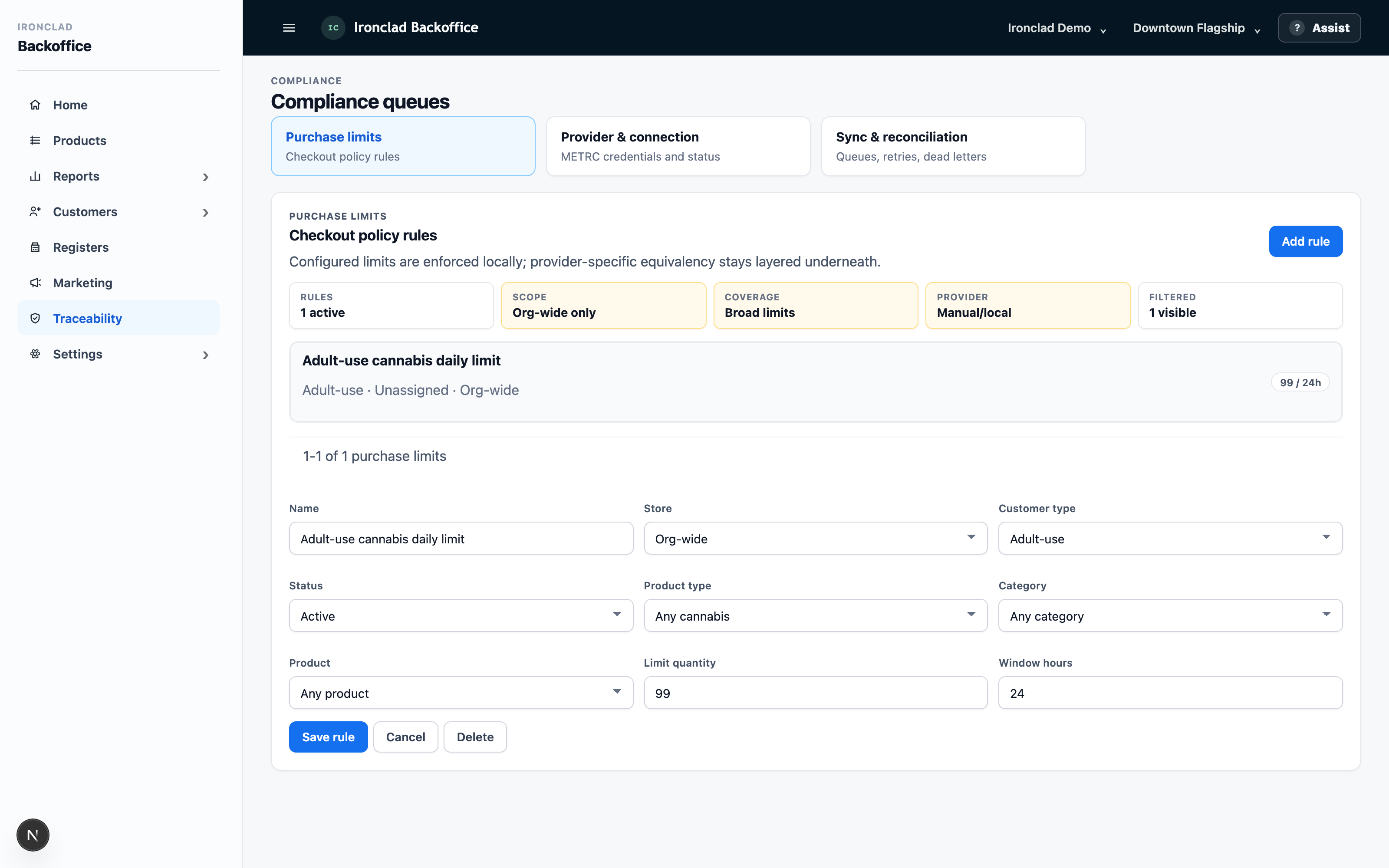
Server-enforced limits
Michigan's 2.5 oz transaction and concentrate caps block the sale at checkout.
Sync adapters
Items, packages, patients, and lab results stay mirrored from METRC.
Read-only state policy
Store owners can inspect state limits, but cannot edit or disable them.
Dead-letter recovery
Failed reports queue for repair — nothing silently disappears.
Evidence trail
Every cart action journaled, so the audit answers itself.
The whole story
Compliance you can't forget to do.
Most POS systems treat METRC as an export you run at the end of the day and a limit chart taped to the counter. Ironclad treats it as infrastructure. Every completed sale is reported to Michigan METRC v2 automatically with its receipt number, while items, packages, patients, and lab results sync through dedicated adapters. State purchase policy is read-only to merchants and released through Ironclad's reviewed compliance process.
Enforcement happens in the server, not in the budtender's memory: the 2.5 oz adult-use transaction limit and concentrate cap are computed on every cart, every time, and an over-limit sale cannot complete. When METRC itself has a bad day, failed reports land in a dead-letter queue with full context for recovery — so the trail stays complete even when the state's API doesn't.
Next step